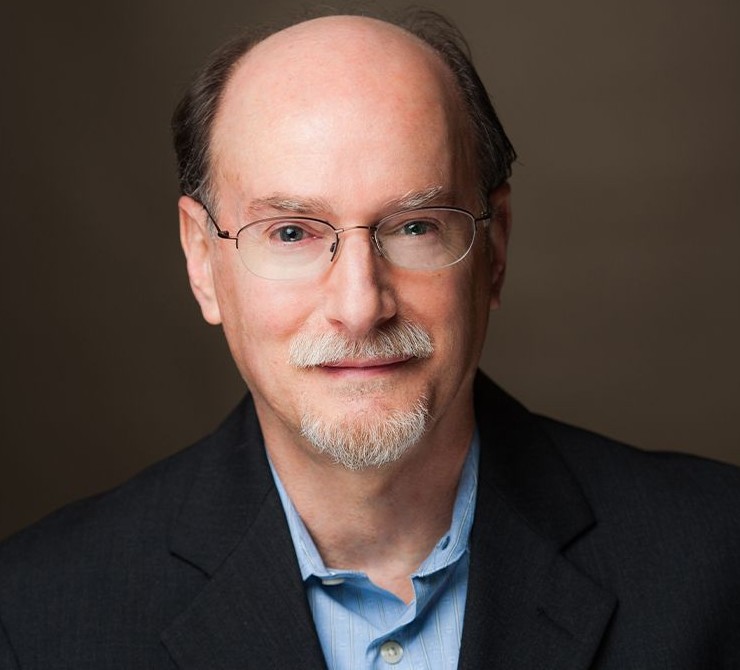
Dean Radin
Fringe Physics: Experimental Tests of the Consciousness–Collapse Hypothesis The role of observation in quantum mechanics remains one of the most persistent and intriguing open questions in science. From the earliest formulations of quantum theory, it was clear that measurement plays a special role, yet precisely what that role entails is still debated. Among the more provocative responses to this puzzle is the proposal, associated with von Neumann and others, that conscious observation itself contributes to the collapse of the quantum wave function. While this idea has long occupied a marginal position within physics, it continues to attract interest at the intersection of quantum theory, philosophy of mind, and consciousness studies. The title Fringe Physics is intended in a double sense. It reflects both the unconventional status of the consciousness-collapse hypothesis and the fact that many of the relevant experiments involve interference fringes in quantum-optical systems. In this talk, I review known experimental efforts that have explicitly or implicitly tested observer-dependent collapse, including optical double-slit studies. Although the range of experiments differ widely in methods and interpretations, they collectively form a small but coherent body of empirical work that has not been widely known outside specialized communities. A central aim of the talk is to clarify distinctions that are often blurred in discussions of this topic. One is the difference between the strong claim that consciousness is necessary for wave-function collapse and the weaker claim that conscious observation may, under certain conditions, measurably influence quantum outcomes. Another is the distinction between establishing the existence of a small observer-dependent effect versus demonstrating practical or technological significance. The experimental literature bears only on these weaker claims, yet the evidence is frequently criticized as if it were advancing the strongest possible versions of the hypothesis. I will also discuss a recent analysis by Chalmers and McQueen, who examined consciousness-based collapse models from the perspective of both philosophy of mind and quantum theory. They argue that while simple versions of the consciousness-collapse hypothesis are unlikely to be correct, more sophisticated formulations remain empirically open and, in principle, testable. Their work provides a useful framework for assessing whether such proposals should be regarded as legitimate scientific hypotheses rather than as purely metaphysical speculation. The talk concludes with cautious, provisional conclusions. I do not claim that the consciousness-collapse hypothesis has been established, nor that it provides a superior solution to the measurement problem. Rather, I suggest that the existing experimental record, though limited, is sufficiently structured to justify continued, careful investigation. At minimum, these studies serve as informative probes of our assumptions about measurement, observation, and the relationship between consciousness and the physical world. Whether they ultimately point toward new physics or help refine existing theories, they occupy a scientifically legitimate—and still unresolved—fringe.